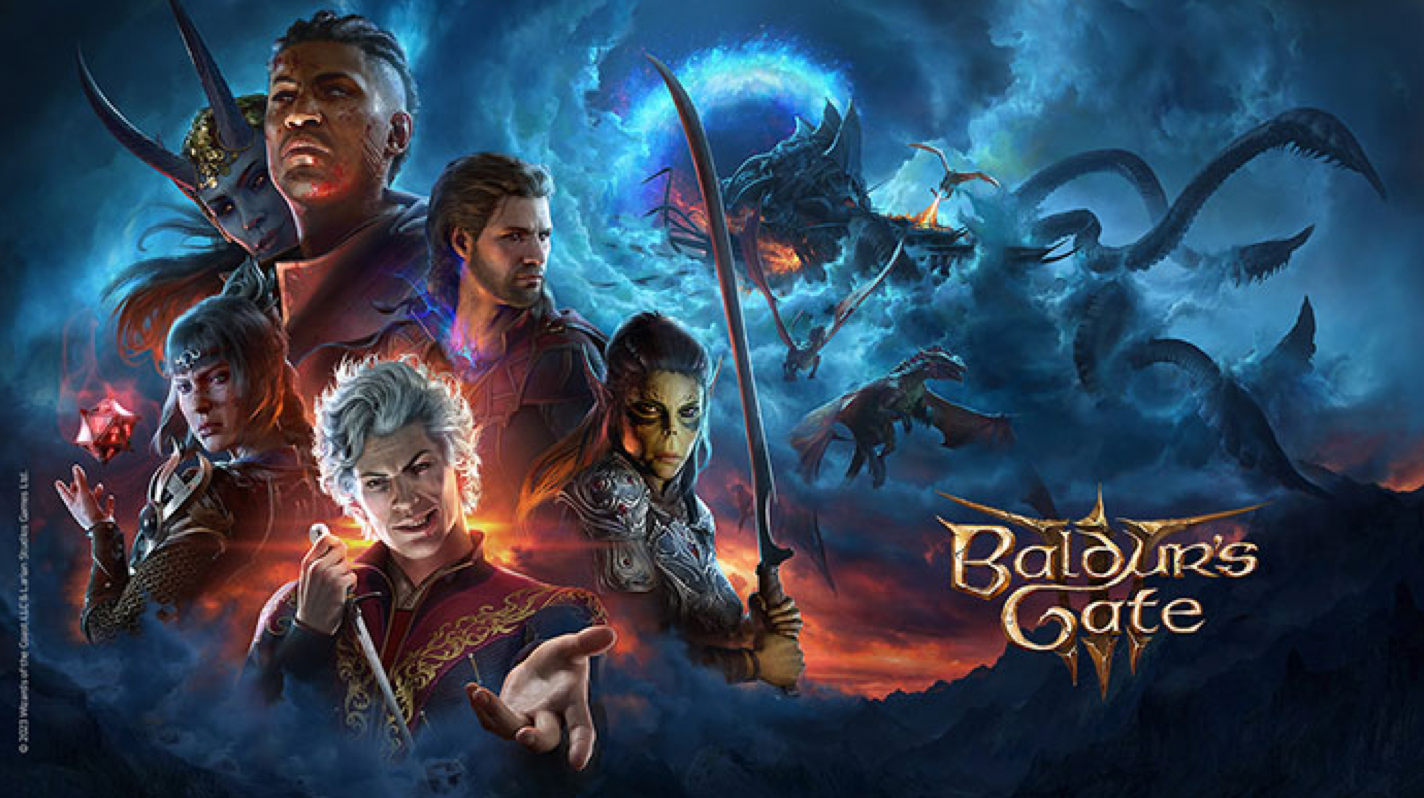
 | Exploring morality through gaming is a way to connect the digital world to the physical to create compelling stories that exist outside of the moral vacuum of digital media. In a world of games with violence simply for the sake of winning, players are exposed to a separate reality devoid of moral obligations. |
Baldur’s Gate 3 (2023) discourages moral disengagement by giving non-playable characters their own agency and values, connecting the player to their stories and personalities. Baldur’s Gate 3 is a role-playing game set in the universe of Dungeons and Dragons that allows the player to explore the open world with requitable companions and make game-altering decisions affecting non-playable characters (NPC’s) relationships and the future of the fictional world.
Several different game modes allow the player to cater the difficulty to their liking, and vast character customization options of different backgrounds and fictional races. In this open-world fantasy, players are exposed to themes present in our reality such as dictatorships, cycles of abuse and the cost of freedom. Baldur’s Gate 3 bridges the disconnect between the virtual and physical worlds by engaging the player’s humanity and empathy through positive reinforcement, having the virtual world be connected to our reality and challenging the player with temptation; allowing for the concept of morality to be explored in the virtual form.
Positive Reinforcement
In Baldur's Gate 3, there are multiple paths the players can choose to take and people they can choose to support or oppose. One of the first moral decisions a player can make is to support a group of refugees from their attackers or to help the attackers destroy the refugees; the easier path being helping the attackers. Although the evil path is easier, the opening weekend statistics show that almost 70 percent of players chose to save the refugees. Players are not only rewarded for helping those in need with money and armour, but they are also given the satisfaction of being able to see these characters progress through the story therefore giving the player a sense of accomplishment in doing the right thing.
In Baldur's Gate 3, there are multiple paths the players can choose to take and people they can choose to support or oppose. One of the first moral decisions a player can make is to support a group of refugees from their attackers or to help the attackers destroy the refugees; the easier path being helping the attackers. Although the evil path is easier, the opening weekend statistics show that almost 70 percent of players chose to save the refugees. Players are not only rewarded for helping those in need with money and armour, but they are also given the satisfaction of being able to see these characters progress through the story therefore giving the player a sense of accomplishment in doing the right thing.
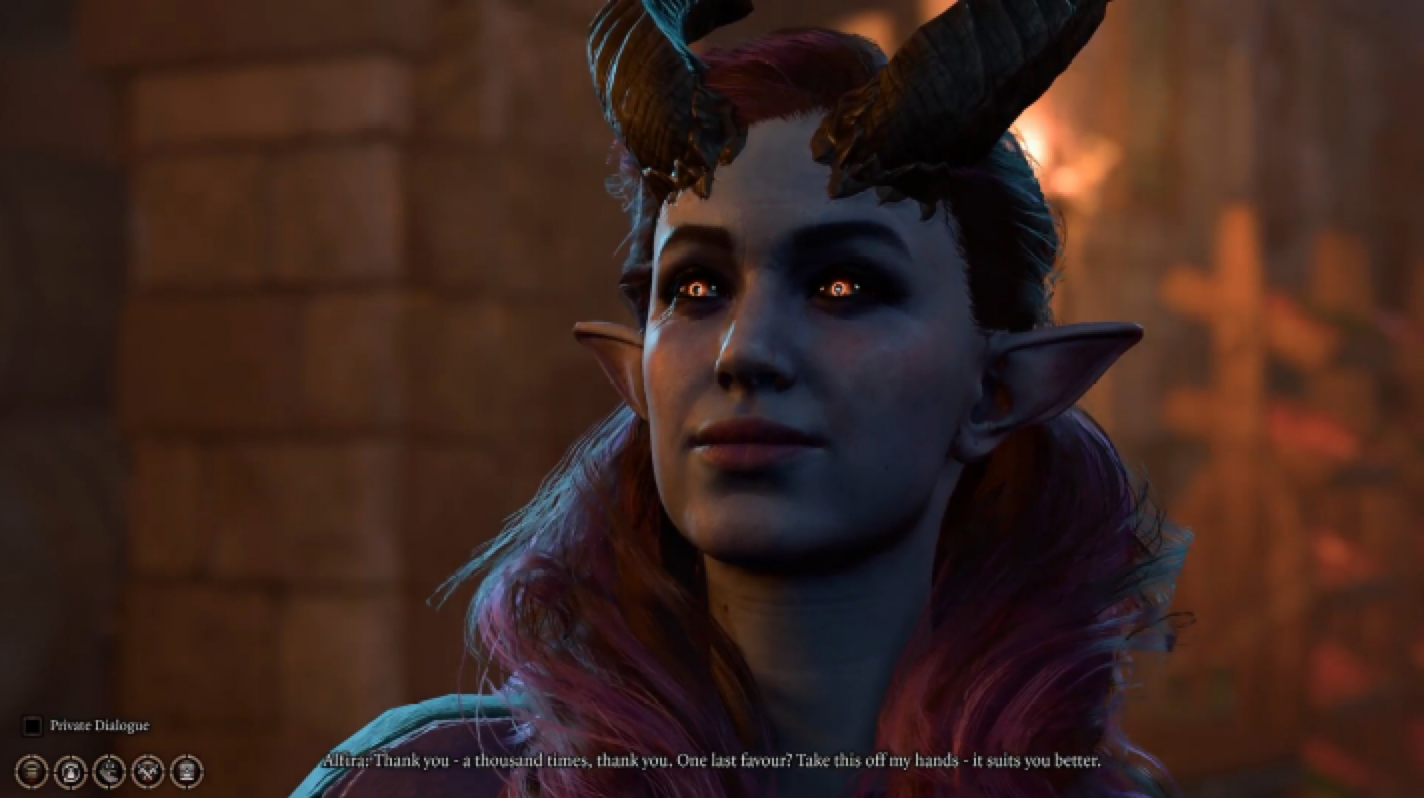
Another example of positive reinforcement in Baldurs Gate 3 is found at the very end of the game. Upon completion, the future of the companions and world is determined by the player, which leads to multiple possible endings for each companion and for the player themself. It is only through giving up the possibilities of great power the player can allow for the freedom and autonomy of all of the companions and the city of Baldur’s Gate. The satisfaction the player receives upon making selfless decisions and refusing to allow the desire for power to overtake them is critical in encouraging good action. The player is then rewarded not with just more content, but a satisfying ending to their story. Therefore even delayed rewards are crucial to positive reinforcement, Wang (2012) stated that reward mechanisms in video games can enhance feelings of fun long before rewards are actually given—that is, rewards can create a sense of anticipation among players who know what is specifically required to earn them. The simple knowledge of there being special endings for different outcomes allows the player to look forward to the future satisfaction of finishing the game, especially when playing for the best outcome.
Humanity Transcending Reality
Good actions are for the most part the more difficult path in Baldur’s Gate 3, but through having the player connect with the characters and learning their stories it becomes morally difficult to ignore their humanity. Hartmann (2017) stated that if players see something social instead of pixels … they should also tend to see them as agents worthy of proper moral treatment. Through speaking with the refugee community we learn of the NPC’s hopes and dreams and unique personalities allowing us to feel empathy towards them. Well-written characters allow the player to feel connected with the virtual and compel empathy towards them. Another way in which the game forces you to acknowledge the characters as beings deserving of the same respect a human would is their agency. Companion characters do not just simply help fight battles mindlessly, but have their own moral codes and will use their freedom to leave you game if the player does something they disagree with.
Humanity Transcending Reality
Good actions are for the most part the more difficult path in Baldur’s Gate 3, but through having the player connect with the characters and learning their stories it becomes morally difficult to ignore their humanity. Hartmann (2017) stated that if players see something social instead of pixels … they should also tend to see them as agents worthy of proper moral treatment. Through speaking with the refugee community we learn of the NPC’s hopes and dreams and unique personalities allowing us to feel empathy towards them. Well-written characters allow the player to feel connected with the virtual and compel empathy towards them. Another way in which the game forces you to acknowledge the characters as beings deserving of the same respect a human would is their agency. Companion characters do not just simply help fight battles mindlessly, but have their own moral codes and will use their freedom to leave you game if the player does something they disagree with.
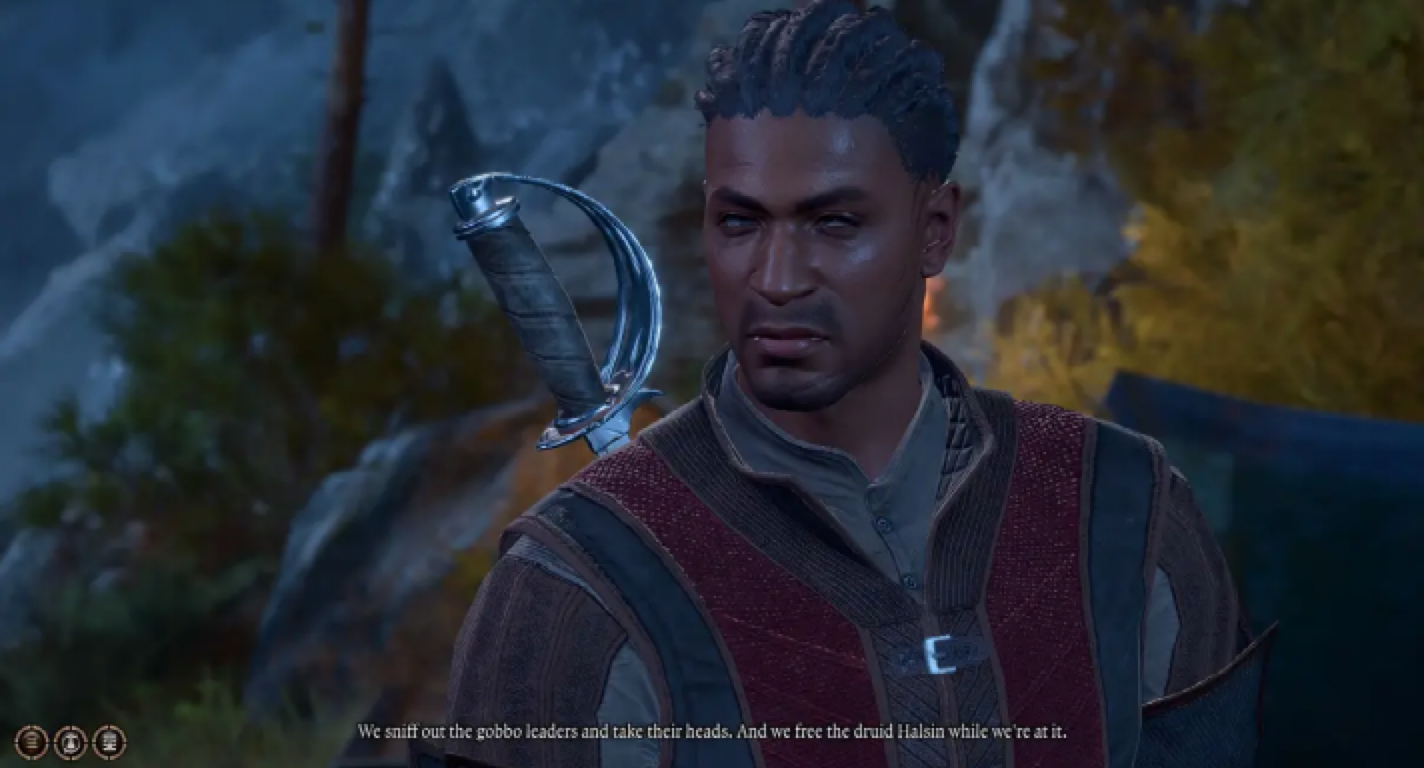
This connection with morality is an important factor in the construction of new games especially since Formosa et al. (2016)stated that in the past, videogames have been considered “amoral spaces,” the actions taken in them requiring little to no reflection. The complexity of characters and giving them human qualities despite being pixels allows for philosophy and moral code to be very prevalent throughout gameplay.
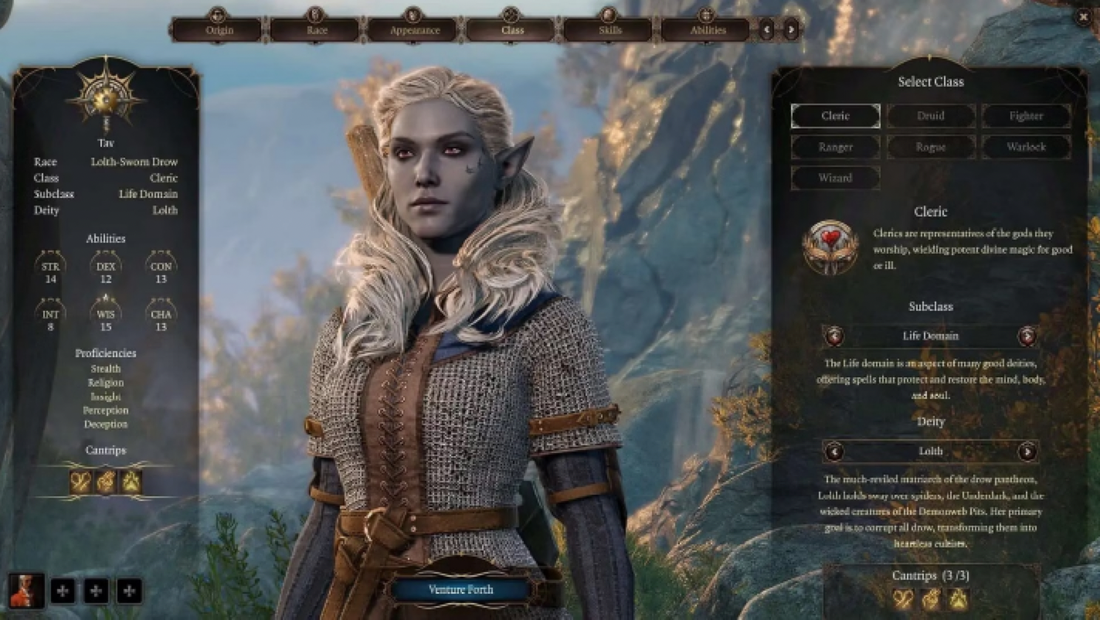
Another way in which the player connects with the world of Baldur’s Gate 3 is the vast options for character customization. Consalvo (2016) stated that players construct themselves as individuals with a particular moral code or ethos. That “self” is still a character to some extent, but it’s a character that is intimately tied to how players rationalize or make sense of the decisions they make in daily life. Therefore games allowing for full character customization foster immersion of the player’s morality into the virtual world.
Challenging Morality
Baldur’s Gate 3 for the most part encourages good actions through exclusive loot, storylines and companions, but it also creates scenarios to tempt the player and test their morals. One such controversial decision is ignoring the agency of a companion to obtain an otherwise impossible-to-acquire potion which would permanently help the player. Obtaining this potion does not have any major consequences nor does the companion leave the player for the rest of the game, despite this it is an unpopular decision amongst players, due to the player's wish to respect the companion's agency over power.
Challenging Morality
Baldur’s Gate 3 for the most part encourages good actions through exclusive loot, storylines and companions, but it also creates scenarios to tempt the player and test their morals. One such controversial decision is ignoring the agency of a companion to obtain an otherwise impossible-to-acquire potion which would permanently help the player. Obtaining this potion does not have any major consequences nor does the companion leave the player for the rest of the game, despite this it is an unpopular decision amongst players, due to the player's wish to respect the companion's agency over power.
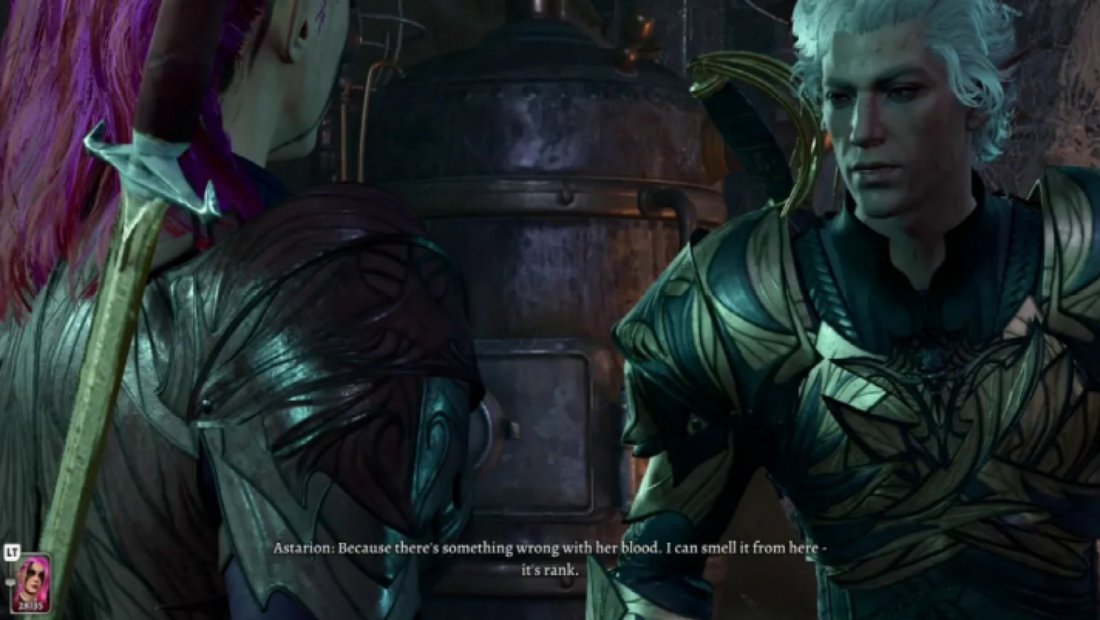
Throughout the game we are exposed to this character’s backstory which supports their reason for not wanting to be controlled or used, this immersion into the character's backstory is an important factor as to why a seemingly beneficial decision becomes easy to reject. It has been argued by Belman & Flanagan (2010) that empathy-centered design can improve the affective experience and emotional response of the player concerning the virtual game character. Due to the fact that the characters in Baldur’s Gate 3 are layered and evoke empathy within us the more difficult decisions become more enjoyable due to empathy keeping with immersion.
Conclude
To conclude, Baldur’s Gate 3 creates a compelling environment for exploring and testing the player's morality. The game bridges the gap between the physical and virtual worlds through unique narrative choices and character design. Discouraging moral disengagement by connecting players with the values and agency of NPC’s Baldur’s Gate 3 establishes a moral framework beyond the one-dimensional violence-driven narratives found in many other games. The game’s capacity to create a virtual world intertwined with humanity contributes to the exploration of morality throughout the game. Players are able to connect with this virtual world by intertwining their own morality through their choices in the game. This exploration of morality is further explored through the companions' unique backstories and layered personalities. Baldur’s Gate 3 not only provides a uniquely tailored gaming experience but also serves as a platform to reflect on the player's own moral compass, illustrating the potential of video games as tools for exploring morality.
Conclude
To conclude, Baldur’s Gate 3 creates a compelling environment for exploring and testing the player's morality. The game bridges the gap between the physical and virtual worlds through unique narrative choices and character design. Discouraging moral disengagement by connecting players with the values and agency of NPC’s Baldur’s Gate 3 establishes a moral framework beyond the one-dimensional violence-driven narratives found in many other games. The game’s capacity to create a virtual world intertwined with humanity contributes to the exploration of morality throughout the game. Players are able to connect with this virtual world by intertwining their own morality through their choices in the game. This exploration of morality is further explored through the companions' unique backstories and layered personalities. Baldur’s Gate 3 not only provides a uniquely tailored gaming experience but also serves as a platform to reflect on the player's own moral compass, illustrating the potential of video games as tools for exploring morality.
References
Hao Wang, Game Rewarding System: Gaming Experiences and Social Meanings. (2012). https://citeseerx.ist.psu.edu/document?repid=rep1&type=pdf&doi=d850269a6e95214c6212c6402d06edb918f35db9
Tilo Hartmann, the “Moral disengagement in violent video games” model. (2017). https://gamestudies.org/1702/articles/hartmann
Belman J., Flanagan M. (2010). Designing games to foster empathy. International Journal of Cognitive Technology, 15(1), 5–15. https://tiltfactor.org/wp-content/uploads2/cog-tech-si-g4g-article-1-belman-and-flanagan-designing-games-to-foster-empathy.pdf
Consalvo, M., Busch, T., & Jong, C. (2016). Playing a Better Me: How Players Rehearse Their Ethos Via Moral Choices. Games and Culture, 14(3), 216–235.
https://doi.org/10.1177/1555412016677449
Formosa P., Ryan M., Staines D. (2016). Four lenses for designing morally engaging games. Proceedings of the First International Joint Conference of DiGRA and FDG. http://www.digra.org/digital-library/publications/four-lenses-for-designing-morally-engaging-games/
Hao Wang, Game Rewarding System: Gaming Experiences and Social Meanings. (2012). https://citeseerx.ist.psu.edu/document?repid=rep1&type=pdf&doi=d850269a6e95214c6212c6402d06edb918f35db9
Tilo Hartmann, the “Moral disengagement in violent video games” model. (2017). https://gamestudies.org/1702/articles/hartmann
Belman J., Flanagan M. (2010). Designing games to foster empathy. International Journal of Cognitive Technology, 15(1), 5–15. https://tiltfactor.org/wp-content/uploads2/cog-tech-si-g4g-article-1-belman-and-flanagan-designing-games-to-foster-empathy.pdf
Consalvo, M., Busch, T., & Jong, C. (2016). Playing a Better Me: How Players Rehearse Their Ethos Via Moral Choices. Games and Culture, 14(3), 216–235.
https://doi.org/10.1177/1555412016677449
Formosa P., Ryan M., Staines D. (2016). Four lenses for designing morally engaging games. Proceedings of the First International Joint Conference of DiGRA and FDG. http://www.digra.org/digital-library/publications/four-lenses-for-designing-morally-engaging-games/
 RSS Feed